Computing

The use of computers and computer systems is an integral part of the National Curriculum and knowing how they work is a key life skill. In an increasingly digital world there now exists a wealth of software, tools and technologies that can be used to communicate, collaborate, express ideas and create digital content. At St Mary’s CE Primary School we recognise that pupils are entitled to a broad and balanced computing education with a structured, progressive, approach to the learning how computer systems work, the use of IT and the skills necessary to become digitally literate and participate fully in the modern world. The purpose of this policy is to state how the school intends to make this provision.
Aims
The school’s aims are to:
- Provide a broad, balanced, challenging and enjoyable curriculum for all pupils.
- Develop pupil’s computational thinking skills that will benefit them throughout their lives.
- Meet the requirements of the national curriculum programmes of study for Computing at Key Stage 1 and 2
- To respond to new developments in technology
- To equip pupils with the confidence and skills to use digital tools and technologies throughout their lives.
- To enhance and enrich learning in other areas of the curriculum using IT and computing.
- To develop the understanding of how to use computers and digital tools safely and responsibly
The National Curriculum for Computing aims to ensure that all pupils:
- can understand and apply the fundamental principles of computer science, including logic, algorithms, data representation, and communication
- can analyse problems in computational terms, and have repeated practical experience of writing computer programs in order to solve such problems
- are responsible, competent, confident and creative users of information and communication technology.
Rationale
The school believes that IT, computer science and digital literacy:
- are essential life skills necessary to fully participate in the modern digital world.
- allows children to become creators of digital content rather than simply consumers of it.
- provides access to a rich and varied source of information and content.
- communicates and presents information in new ways, which helps pupils understand, access and use it more readily.
- can motivate and enthuse pupils.
- offers opportunities for communication and collaboration through group working
- has the flexibility to meet the individual needs and abilities of each pupils.
EYFS Computing Curriculum
Knowledge Organisers
Please click on the links below to view or download the year EYFS Knowledge MATs.
Year 1 Computing Curriculum

Knowledge Organisers
Please click on the links below to view or download the year 1 Knowledge MATs.
Year 2 Computing Curriculum

Knowledge Organisers
Please click on the links below to view or download the year 2 Knowledge MATs.
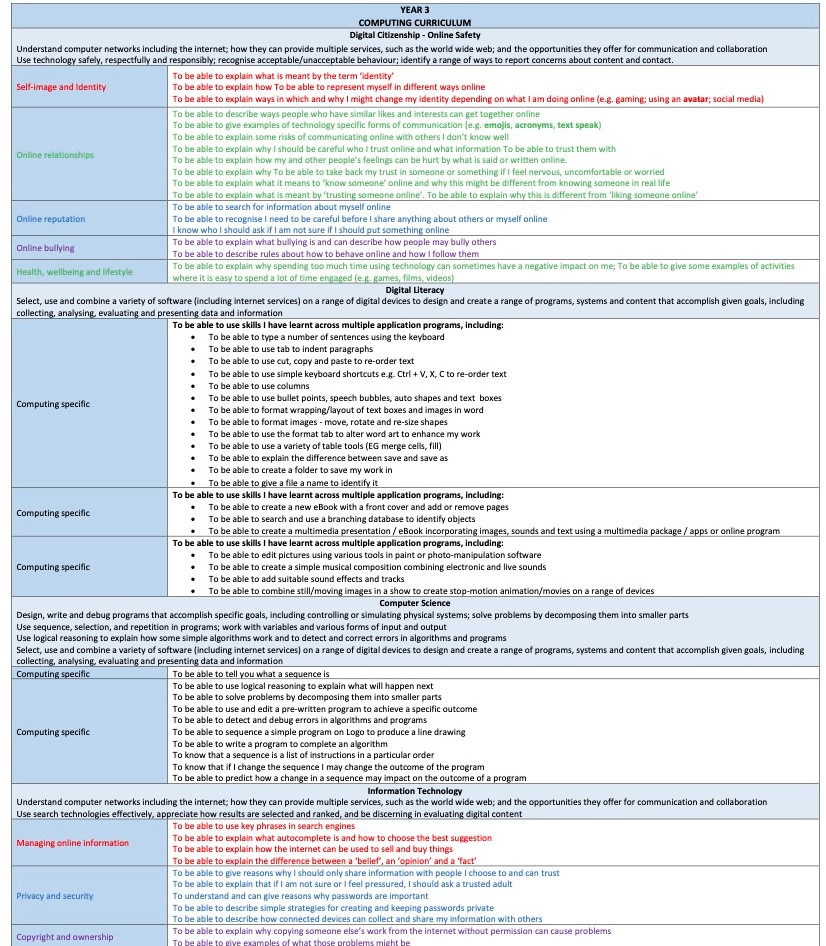
Year 3 Computing Curriculum
Knowledge Organisers
Please click on the links below to view or download the year 3 Knowledge MATs.
Year 4 Computing Curriculum

Knowledge Organisers
Please click on the links below to view or download the year 4 Knowledge MATs.
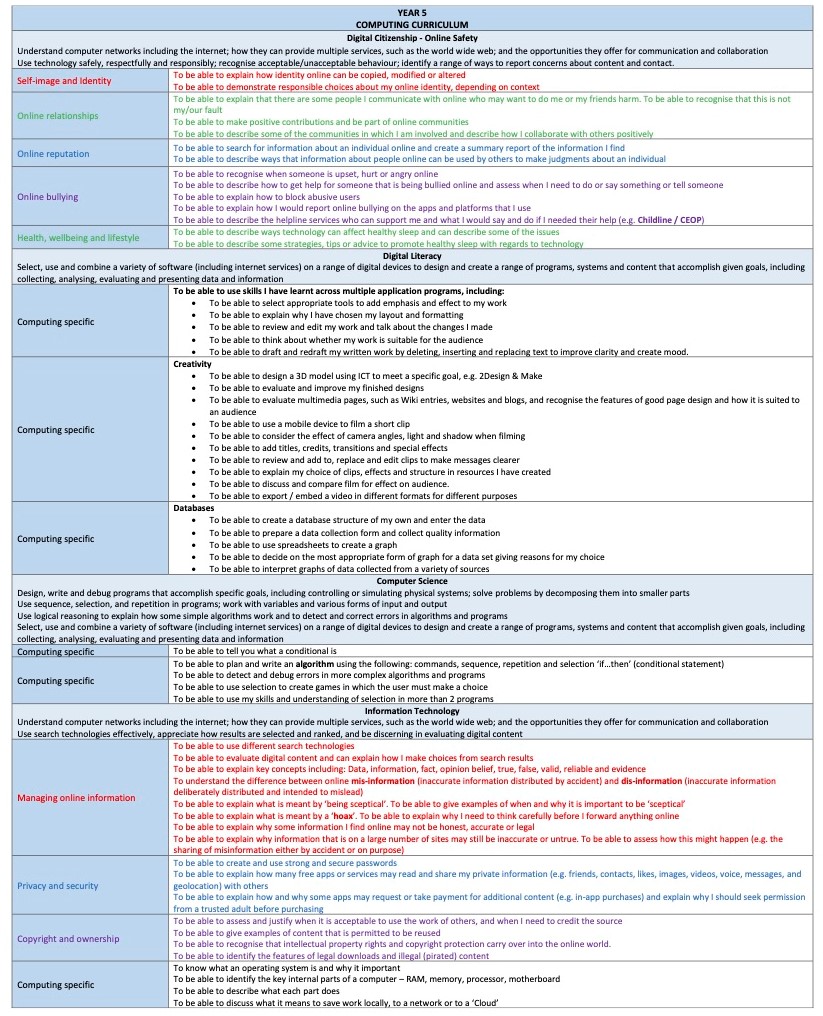
Year 5 Computing Curriculum
Knowledge Organisers
Please click on the links below to view or download the year 5 Knowledge MATs.
Year 6 Computing Curriculum

Knowledge Organisers
Please click on the links below to view or download the year 6 Knowledge MATs.
Policies
- COMPUTING CURRICULUM POLICY >
- SEXTING POLICY >
- ONLINE SAFETY POLICY >
- ARTIFICIAL INTELLIGENCE POLICY >
Computing Curriculum Policy Appendices
- Appendix1 Online Safety Incident Flowchart >
- Appendix2 Bolton SICT Technical Security Overview >
- Appendix3 AUP Staff and Visitor Template >
- Appendix3 AUP EYFS >
- Appendix3 AUP Year1 and Year2 >
- Appendix3 AUP Year3 and Year 4 >
- Appendix3 AUP Year5 and Year6 >
Useful Links