Mathematics

Mathematics equips pupils with a uniquely powerful set of tools to understand and change the world. These tools include logical reasoning, problem-solving skills and the ability to think in abstract ways.
Mathematics is important in everyday life. It is integral to all aspects of life and with this in mind we endeavour to foster a healthy and enthusiastic attitude towards mathematics that will stay with our children for life.
St Mary’s Primary School follows the National Curriculum 2014, which ensures continuity and progression in the teaching of mathematics. In early years the curriculum is guided by the Early Learning Goals within the EYFS Framework 2014.
Aims
General
- To raise the standards of mathematics by supporting children through common understanding and expectation;
- To promote the enjoyment of learning through practical activity, exploration and discussion;
- To create an atmosphere in which children have a positive attitude to enable them to approach all problems with confidence and enthusiasm;
- To make children aware of the uses of mathematics in everyday learning and in the world beyond the classroom;
- To enable all children to reach their full potential and achieve the highest possible personal standards;
- To support children in achieving the Every Child Matters outcomes;
- To make mathematics lessons enjoyable for all children.
Specific
- To fulfil the aims of the National Curriculum for Mathematics, children will be enabled to:
- Have a sense of the size of a number and where it fits into the number system;
- Know by heart number facts such as number bonds, multiplication tables, doubles and halves;
- Use what they know to figure out answers mentally;
- Calculate accurately and efficiently, mentally and with pencil and paper, drawing on a range of calculation strategies;
- Recognise when it is appropriate to use a calculator and be able to do so effectively;
- Make sense of number problems, including non-routine problems, and recognise the operations needed to solve them;
- Explain their methods and reasoning using correct, mathematical terms;
- Judge whether their answers are reasonable and have strategies for checking them;
- Suggest suitable units for measuring and make sensible estimates of measurement;
- Explain and make predictions from the numbers in graphs, diagrams, charts and tables;
- Explain properties of 2d/3d shape, position, direction and movement.
Times Tables
You can practise times tables using these websites:
What times tables does my child need to know?
It is a requirement of the National Curriculum for Mathematics that children should know their time’s tables and related division facts up to 12 x 12 by the end of year 4.
Helping your child to practise them a little but often will ensure they meet the year 4 expectation.
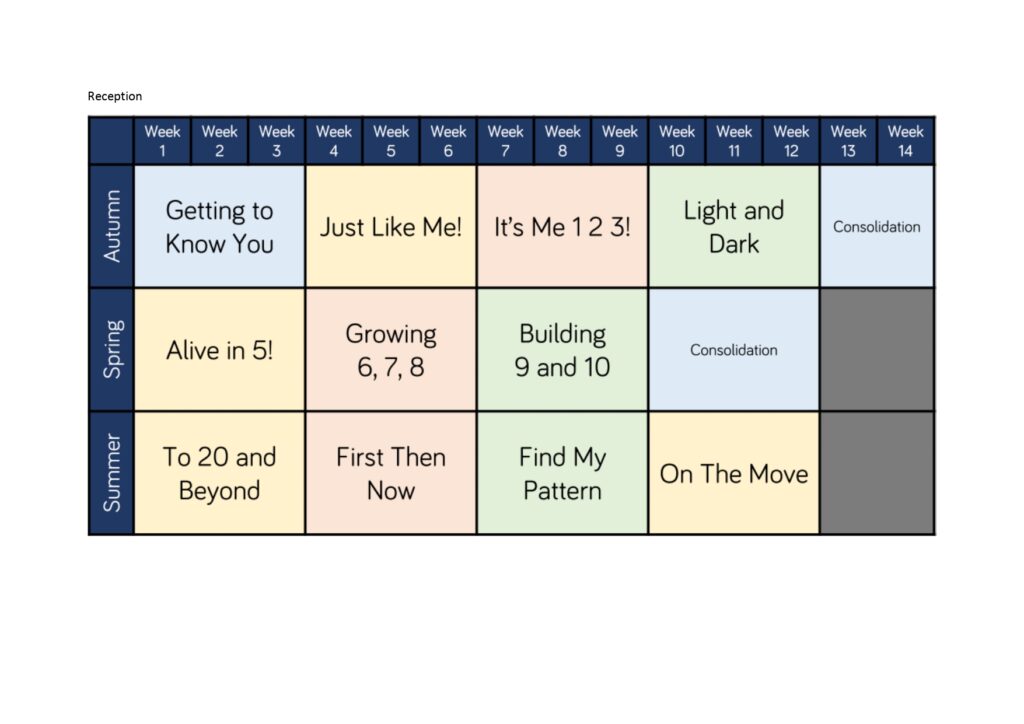
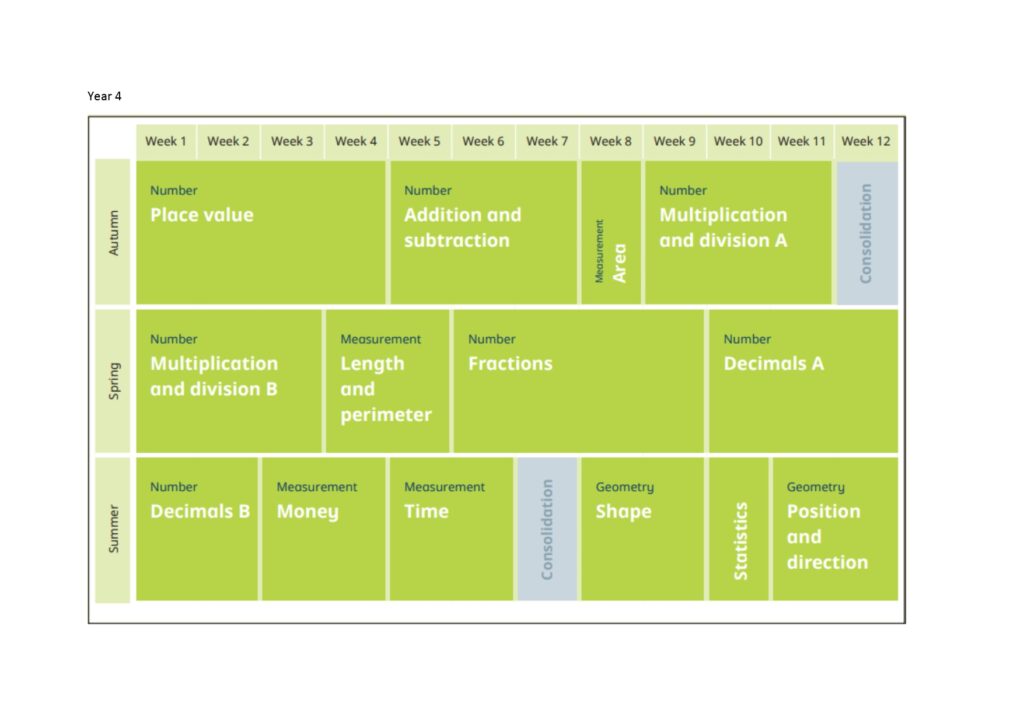
Expectations by Year Group:
Reception
Year 1

Year 2

Year 3

Year 4
Year 5

Year 6

Policies